Leiston Abbey originally started life as St Mary's Abbey at Minsmere in Suffolk. It was founded by Ranulf de Glanville in 1182 however due to unhealthy and undesriable site conditions due to being built on swampy groung the abbey moved from Minsmere to its present location in 1363. Very little is left at the original location due to it being dismantled for building materials to build the new abbey at Leitson, however sections of the proiry chapel can still be seen at Minsmere.
Leitson Abbey was home to a group of Augustinian Canons Regular following the premonstratensian rule. They held many duties including preaching and pastoral work unlike monks.
Like so many other abbeys, priories and monasteries, Leiston Abbey fell victim to the dissolution of the monasteries, after which is fell into ruin and become a farm with the farm house being built into the ruins of the abbey. Today the site is under the guardianship of English Heritage.
Friday, 22 February 2013
Monday, 2 July 2012
Piggery (Kett's Heights)
I have been meaning to publish this post for a while, well shortly after I posted about Kett's castle however I have been busy hunting and searching for new places to post about.
Anyway here it is.
The piggery was a former stables which was converted at the start of World War Two when the need for locally produced food was high. Along with the piggery a concrete lined pond was used as a place to collect water for the livestock.
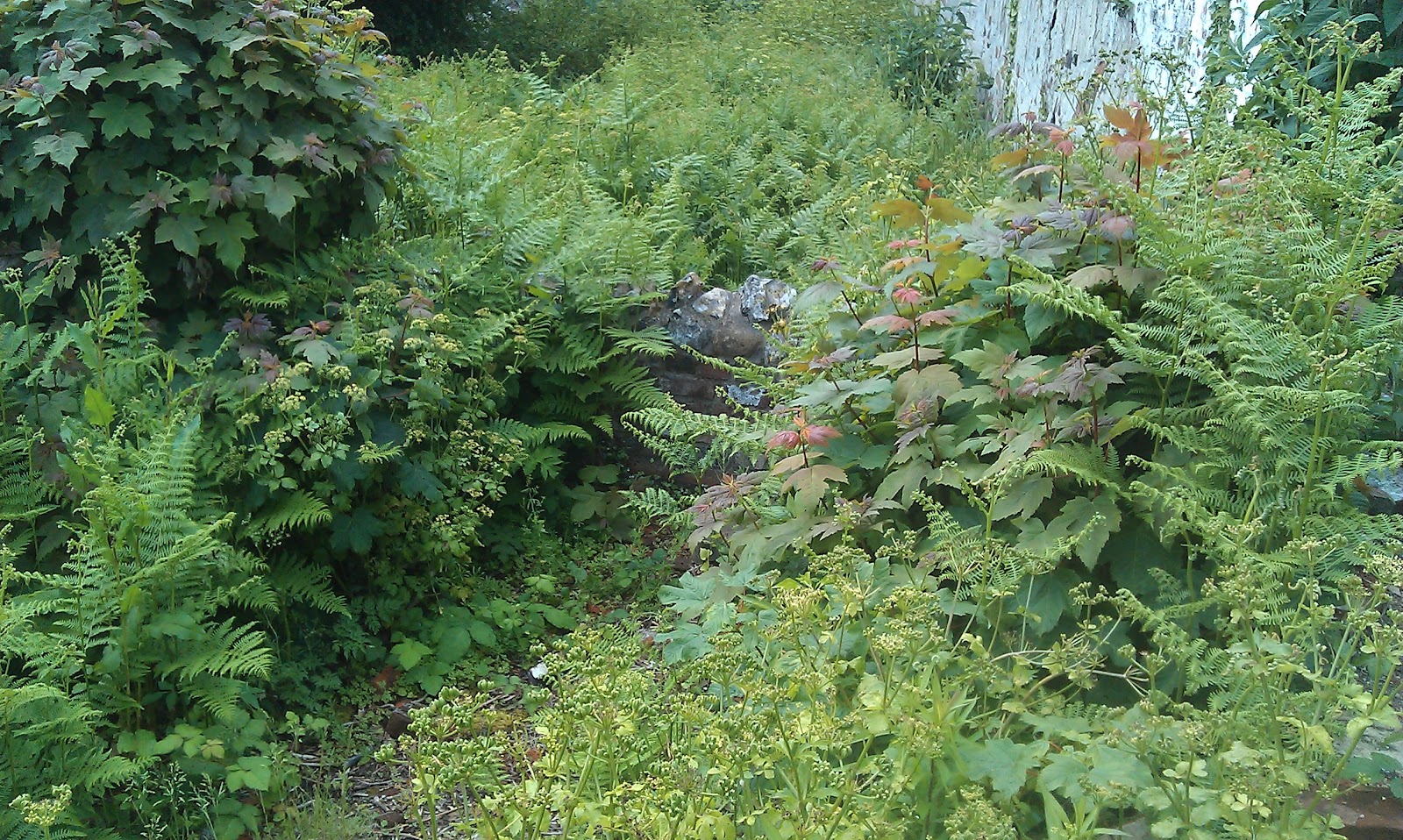
At the site of St Michael's chapel the flint walls are all that remains of a greenhouse which along with the piggery (stables) are all that remains of the height's previous use. Before being a place for food production, the height's were used as gardens created by the manager of the city gasworks which resided at the bottom of the hill. Local people used the hillside and gardens as allotments growing Alexanders which is used as a substitute for celery. This plant can still be seen growing in abundance all over the hillside.
Sunday, 17 June 2012
Kett's Castle (Chapel of St Michael on the mount)
A couple of weeks ago I visited Kett's heights, Thorpe Hamlet on the edge of the city centre. There have been many uses of this site over the years from alotments to parkland to camp site of a rebelious mob. I became interested in this site after a discussion with a friend regarding a photo he had taken of the site. In the photo were some flint walls. The reason for my interest is that I had read an article and had knowledge of there being religious buildings on this site from around the 11th Century. I had heard and researched St Leonard's Priory. I will not go into this monastic house in detail here as I will post this seperately.
Please visit the blog of my friend to view the photos that started my interest in this area of the city. http://eastscapes.blogspot.co.uk/2011/05/on-top-of-city-ketts-heights.html
Having visited the site and walking around it for a few minutes I cam across what I was looking for. I found the old flints walls which mark the location of the Chapel of St Michael on the mount. In the late 11th Century Bishop Herbert De Losinga, the first bishop of Norwich, embarked upon building the Cathedral and in the process several Anglo-Saxon churches were demolished, one such church was St. Michael's. So as to build bridges and make amends with the Ango-Saxon population Bishop Herbert had a small chapel built on the mount and called it St. Michael's. The chapel was cared for and managed by the monks from St Leonard's, with their duties including daily services at the chapel.
Around 400 years later, St Michael's chapel fell into disuse as a chapel. However is 1549 during the rebellion lead by Robert Kett the Chapel of St. Michael was used again. This time it was used as the headquarters for Kett's campaign against the city. Using the remains of the chapel on the mount as his 'castle' it gave him a great vantage point to view what was going on in the city below him.
Sunday, 3 June 2012
Lady Eleanor Talbot (Lady Butler)
At the same site of Whitefriars Monastry in Norwich I found a plaque on the wall informing me that this is the final resting place to Lady Eleanor Talbot. I had never heard of her until this point and therefore had to do some research before I could post the photo on here.
Well, what a story I have come across with this one.
Lady Talbot was born in 1436, daughter of John Talbot the 1st Earl of Shrewsbury. In 1449, aged just 13, Lady Eleanor married Sir Thomas Butler, however in March of 1461 Thomas Butler died.
It is also commented that she had friendships with Edward IV. I discovered that he had siezed ownership of two manors she had owned with her husband. When she requested ownership of the manors back he attempted to have personal relations with Lady Eleanor, however she refused. At this he promised he would marry her.
In June of 1468 Lady Eleanor died at the age of 32 in a convent. She was later buried in the Carmelite Priory Church in Norwich.
Anchorite House or Whitefriars Monastry
Just round the corner from the plaque to Lord Sheffield there are the remains of Anchorite House. Anchorite House was part of the Whitefriars Monastry founded on the site in 1256 by Philip de Cougate. There is very little information relating to this Monastry to be found.
Friday, 1 June 2012
Lord Sheffield
I saw this plaque when looking for the site of the Church of St Matthew the Apostle. Even though I have walked past this plaque before I had not noticed it. Perfect for my site featuring hidden or forgotten histories.
So who was Lord Sheffield?
Well after some research I found out that Lord Sheffield was a gentlemen called Edmund Sheffield born 22nd November 1521. Through his Mother he was second cousin to King Henry VIII.
I also managed to find out that he married Lady Anne de Vere in 1538 and had 5 children. In 1547 he was elevated to title of Baron Sheffield of Butterwick. He was the first often known as Edmund Sheffield, 1st Baron Sheffield. Unfortunately on 1st August 1549 he was killed by a butcher in Norwich during Kett's Rebellion. Sources claim he fell from his horse in a street near the Cathedral Close of Norwich Cathedral and was struck by a butcher.
Monday, 28 May 2012
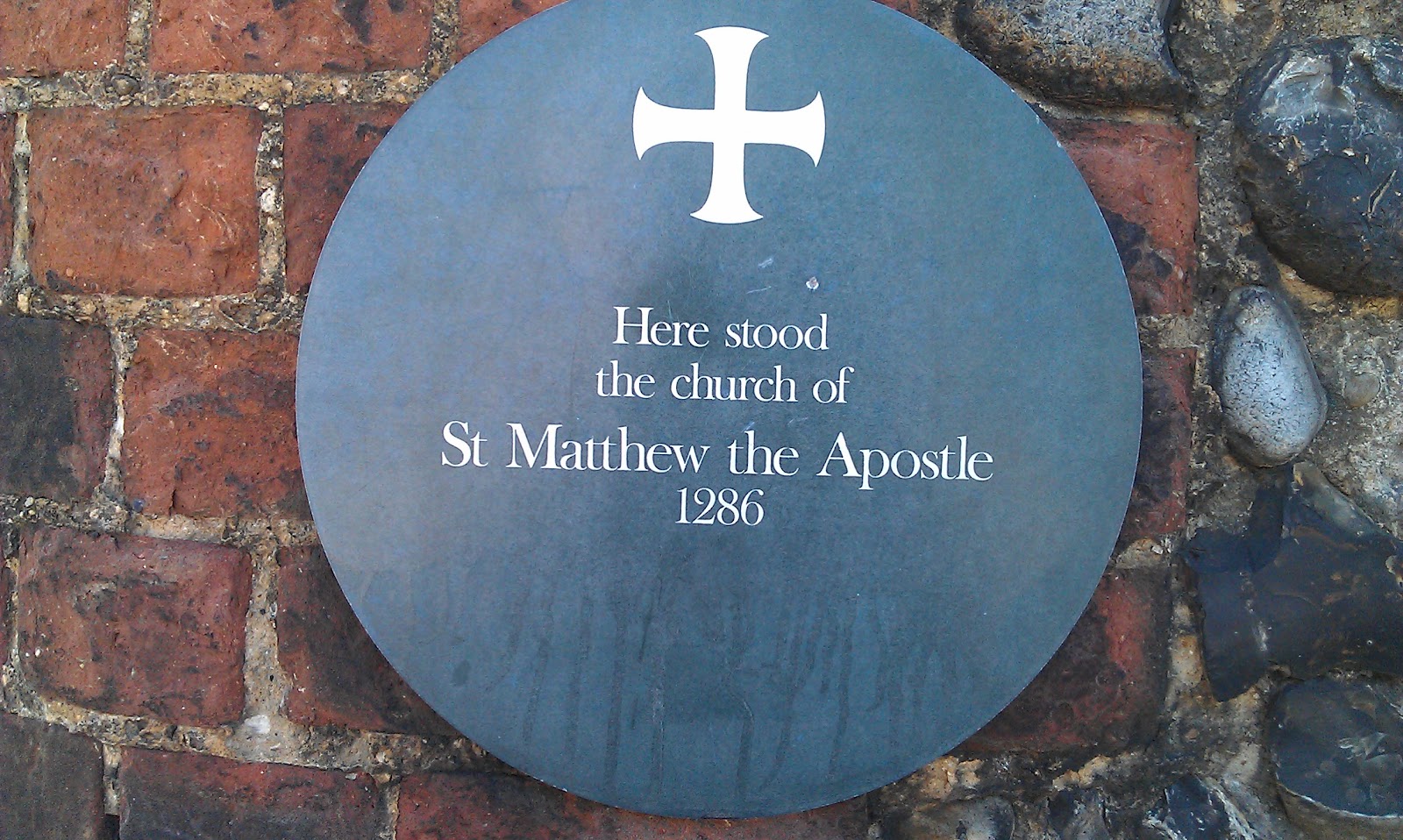
Church of St Matthew the Apostle
Although there is nothing left of the Church of St Matthew the Apostle today, with the site covered with houses and a road. It was one of 5 or 6 chapels or churches within the Cathedral precinct which is now considered to be the Cathedral close of Norwich Cathedral.
Subscribe to:
Posts (Atom)