Showing posts with label Norwich. Show all posts

Wednesday, 11 November 2020

Norwich Cathedral

While this particular building is not a forgotten history, it is one of my favourite buildings. The sheer size of it makes me stand in awe. I am always amazed at how such a building was built almost a thousand years ago on very little in the way of foundations, on low lying and partially marshy land is still standing today. This magnificent building has withstood attack in the form of revolts, fire, bombings during the second world war and general wear and tear.

Cathedral rising up behind the new hostry building
This particular photo I took one evening as I was walking through the cathedral close, it was an autumn/ winter evening and I was mesmorised by the lights shining up the exterior surface of the bulding casting amazing shadows. The first image below is of the south transept and the second image is of the new hostry building with the cathedral rising up behind in the background.

As I said before, not a forgotten history as it dominates the skyline of the city however I wanted to share the photos I took. This post has however given me an idea of future posts, maybe to explore the cathedral and share facts and findings about the place, some of the lesser known facts about the cathedral, its former life as a priory and the land around it.


I hope you enjoy.

South transept, tower and spire


Tuesday, 5 September 2017

St Mary in the Marsh

So this church has illuded me for some time. I think half of the problem was the fact that the church no longer existed having been demolished in the 1500s, as I expected to see some trace of it in the form of ruins or small flint wall sections however there was no trace of this church. 

Some information about this church had come to my attention and so I discussed it with a couple of my friends and on many occassions we looked over the information about the church and its location to see if we could determine the location with respect to the current buildings.

The information I had come across narrowed down our search to the cathedral close as we had found out that the Church of St Mary in the Marsh had been the parish church for the cathedral close or precinct as it would have been known. The church was used constantly and had been extended and rebuilt over the years until in 1564 it was closed and demolished at which point the materials were sold off. However on the plaque in the cathedral close it says that the church was not demolished until 1775. I ponder that this may have been when the final traces of the building were removed.

However the story does not end there and the parish of St Mary in the Marsh continued after this time and still continues to this day. Rather than redrawing parish boundaries after the church was closed, the bishop of Norwich gave permission for one of the side chapels of the cathedral could be used as the parish church instead. The other interesting point about this is that the font from the church was brought over to the new location and still sits in St Luke's chapel at Norwich cathedral.

Well to finish this post off I can say that during a stroll about looking for more forgotten histories, I came across a plaque within the upper close of the Cathedral displaying the location of the church. This I have to say made me very happy. I had finally found the location of the church I had been searching for, for several months. To my annoyance though, I suddenly realised I had strolled past this plaque several time in search of the site. As they say you find things when you are not looking for them!


The Mill, Lyng

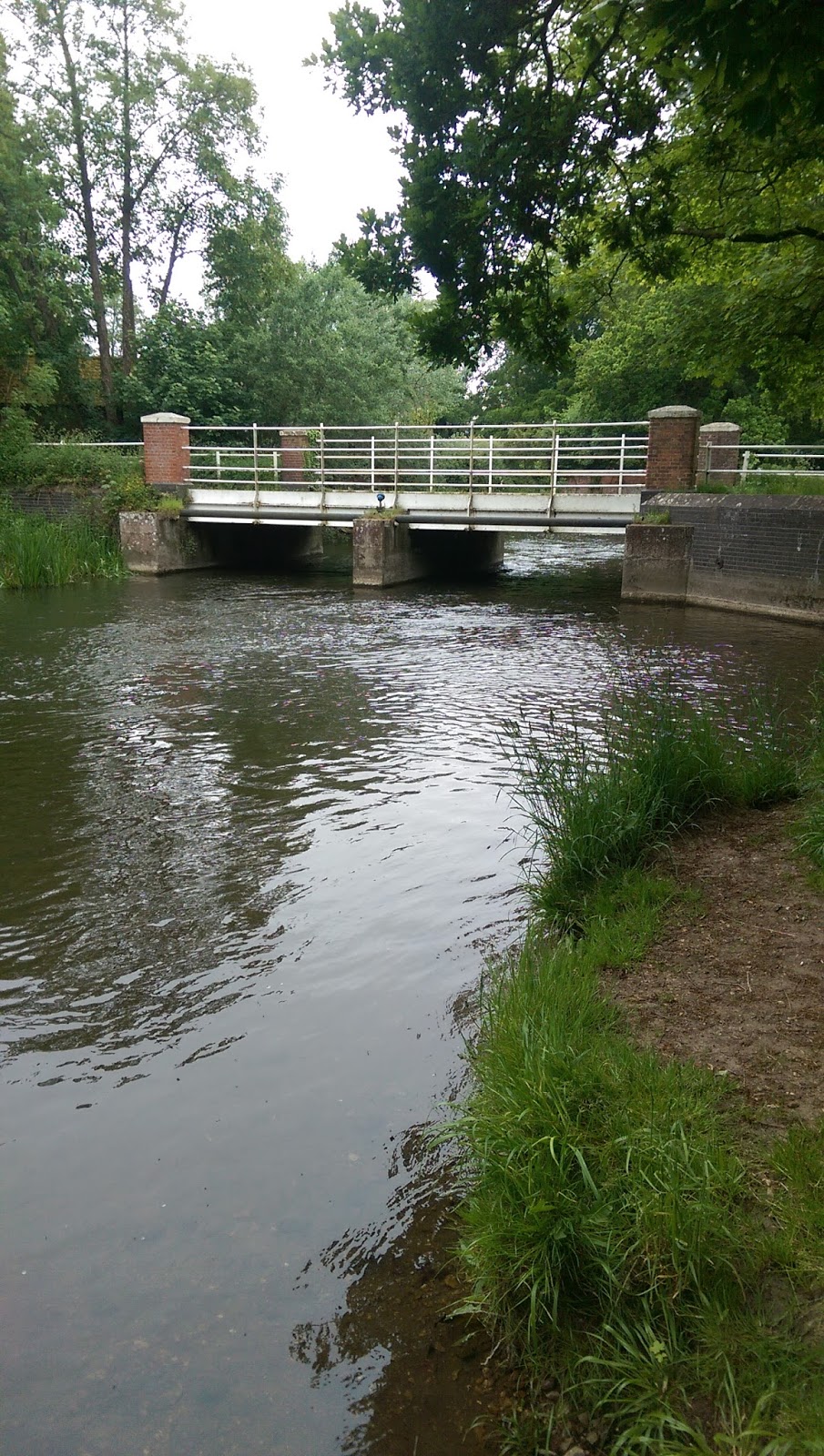
The Mill and Mill house stood on the banks of and over the river Wensum upstream from Norwich about 14 miles out. There isn't much left of the mill itself apart from the water course used to channel the water in such a way as to utilise it and harness the mechanical power it created. Originally it was built in the 1400s as a flour mill but was later converted to be both a flour and paper mill. Records indicate that it also ground corn on occassions.

The mill was badly damaged in 1832 due to riots. It was at this point that it was rebuilt and was configured with two iron wheels, one of which was used to power the flour mill and the other to run the paper mill.

As mentioned above there is very little left of the mill itself apart from the watercourse. Watching the water tumble down was very calming and tranquil. It was a beautifully sunny day which made the site even more mesmorising. The sun reflecting off the water's surface glistening like the sunlight catching the ribbon of a spider's web.

I stood on the bank of the river watching the water bubble past meon it's journey towards Norwich. I was in awe of how clean the water looked. I could see the bottom of the river channel it was that clear. I stood for a few moments longer listening to the trickling water and the wildlife ignoring me and carrying on with its everyday business.

During my visit there, several other people either walked, cycled or drove past. Some of them stopped to admire the beauty of the site like myself. Some of them commented on its beauty.

I would visit the site again and definitely recommend others to visit it as well. There is enough space on the opposite side of the bridge to the mill, where you can sit and relax either on the ground or on some picnic chairs. While there were a few others go past it was not a very busy road and it is therefore very peaceful. A beautiful little corner of countryside that I stumbled upon.


Monday, 2 July 2012

Piggery (Kett's Heights)

I have been meaning to publish this post for a while, well shortly after I posted about Kett's castle however I have been busy hunting and searching for new places to post about.

Anyway here it is.

A piggery on Kett's heights. I found this while searching for St Michael's Chapel on the heights. I thought I would post this on my site as it is a history that has been forgotten about. Today the site is overgrown with very short walls visible under the plant growth.

The piggery was a former stables which was converted at the start of World War Two when the need for locally produced food was high. Along with the piggery a concrete lined pond was used as a place to collect water for the livestock.

At the site of St Michael's chapel the flint walls are all that remains of a greenhouse which along with the piggery (stables) are all that remains of the height's previous use. Before being a place for food production, the height's were used as gardens created by the manager of the city gasworks which resided at the bottom of the hill. Local people used the hillside and gardens as allotments growing Alexanders which is used as a substitute for celery. This plant can still be seen growing in abundance all over the hillside.